Most Ubigi eSIM review content repeats the same points and doesn’t help you decide. Here’s the quick truth.
Ubigi is not trying to be the cheapest, and it is not built around unlimited data. It is built for connection stability in real travel conditions.
If you land, switch on data, and just want it to work without troubleshooting, that is where Ubigi stands out.
In this Ubigi eSIM review, you’ll see how it performs in real use, where it works best, how pricing compares, and whether it’s the right fit for your trip.
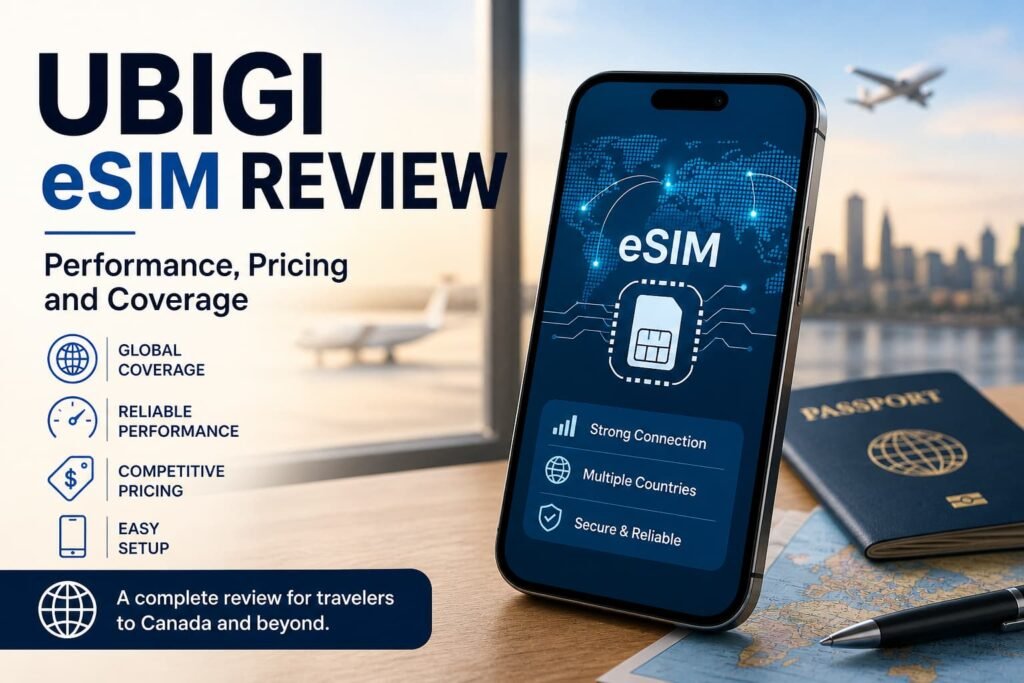
Ubigi eSIM Review: What You Need to Know
Ubigi is built around one thing: stable, reliable connectivity when you’re traveling.
It is operated by Transatel, a telecom company based in Paris, France, and part of the NTT Group, one of the largest global telecommunications providers. This gives Ubigi more control over network routing compared to typical eSIM resellers.
Instead of competing on price or unlimited data, it focuses on consistent performance across major cities and multi-country trips. It offers fixed data plans, coverage in over 190 countries, and a setup process that works across multiple devices without needing constant switching.
You can check available plans and supported countries on the Ubigi official website, or visit the Ubigi help center for detailed setup guides and troubleshooting steps.
Is Ubigi eSIM Worth It for Travel?
Ubigi is worth it if consistent performance matters more than the lowest price.
In most major cities and travel hubs, connections are stable and predictable. Installation is simple, and the connection works without much effort once activated.
Ubigi is a good fit for:
- travelers who rely on data throughout the day
- situations where stable connections are needed for maps, work, or messaging
- trips that involve moving between locations without interruptions
It may not be the best choice if:
- the main goal is the lowest price, see the Airalo eSIM review
- flexible regional pricing is more important, check the Nomad eSIM review
- a simpler setup experience is preferred, read the aloSIM eSIM review
- unlimited data is required, see the Holafly eSIM review
- a premium global solution with broader features is needed, see the GigSky eSIM review
What Ubigi eSIM Is and How It Works
Ubigi is a global eSIM provider backed by Transatel, part of the NTT Group.
Unlike basic resellers, it has more control over how connections are routed.
In real use, that means:
- faster connection after landing
- stable network switching between carriers
- fewer drops in busy areas
Setup is simple:
- buy a plan
- install via QR code or app
- activate when you arrive
What Makes Ubigi Different
Ubigi stands out in a few practical ways that matter when you travel:
- one-time eSIM installation, install once and reuse across countries
- works on laptops and other devices, including Windows and some cars
- top-up without WiFi, you can buy data even if you run out
- strong performance in Europe and Japan, especially in cities
For frequent travelers, this is more convenient than installing a new eSIM for each destination.
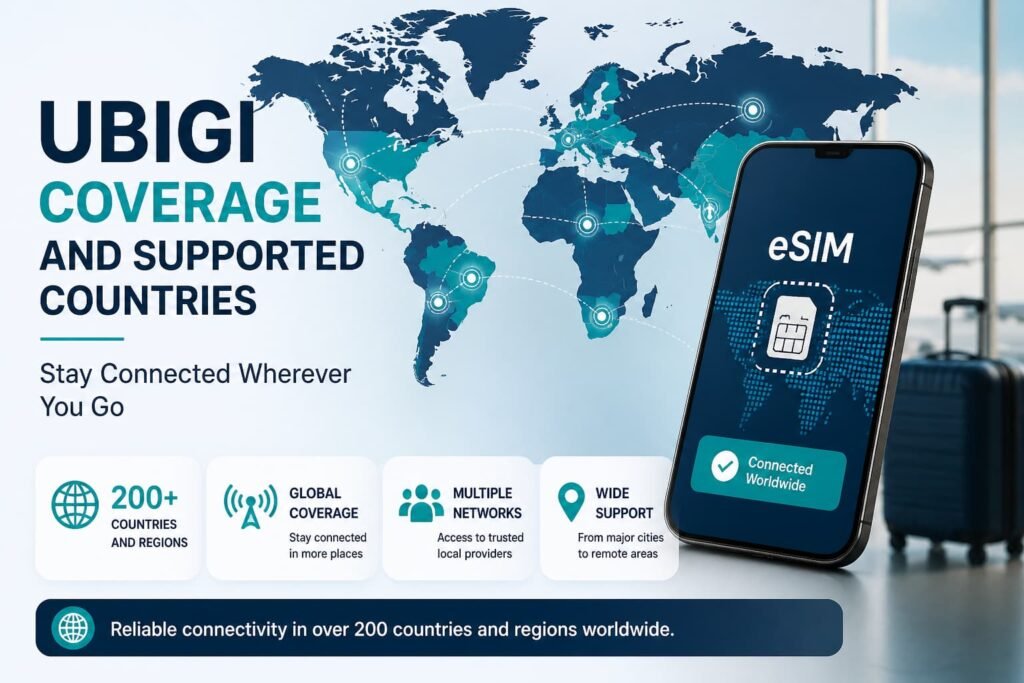
Ubigi Coverage and Supported Countries
Ubigi covers over 200 countries worldwide.
Coverage includes:
- Europe: UK, France, Germany, Italy, Spain
- North America: USA, Canada, Mexico
- Asia: Japan, South Korea, Singapore, Thailand
- Oceania: Australia, New Zealand
- Latin America: Brazil, Argentina, Chile
In cities like Tokyo, Paris, and New York, performance is consistently strong. Coverage can drop in rural areas, similar to most providers.
Compare destinations in the [INTERNAL LINK: eSIM Providers by Country] guide.
Ubigi Data Plans Explained
Ubigi uses fixed data plans with simple tiers:
- 1GB to 3GB for short trips
- 5GB to 10GB for regular use
- larger plans for extended travel
Regional and global plans allow use across multiple countries without switching eSIMs.
aloSIM Pricing and Plan Costs
aloSIM uses a straightforward pricing structure based on data tiers. It’s generally competitive for short and mid-length trips, especially in popular travel destinations.
Example pricing by destination:
| Destination | Data | Duration | Price (USD) |
|---|---|---|---|
| USA | 10GB | 30 Days | $18–$26 |
| Canada | 10GB | 30 Days | $24–$36 |
| Mexico | 5–10GB | 30 Days | $15–$21 |
| UK | 5GB | 30 Days | $15 |
| Japan | 10GB | 30 Days | $15–$28 |
| Europe (Regional) | 10GB | 30 Days | $20–$37 |
Typical pricing tiers:
- 1GB: about $4.50 to $6 (7 days)
- 5GB: about $13 to $20 (30 days)
- 10GB: about $20 to $36 (30 days)
- 20GB: about $30 to $45 (30 days)
aloSIM isn’t always the cheapest option, but pricing is predictable. There are fewer variations and less guesswork compared to providers with more complex plan structures.
Ubigi Speeds and Real World Performance
In real travel use, Ubigi performs reliably in major destinations.
You can expect:
- 4G or LTE in most areas
- 5G in supported cities
- stable connections in airports and urban areas
Typical speeds in cities are consistent enough for daily use, including maps, messaging, video calls, and light streaming.
In user reports, performance is especially strong in Japan and across Europe. Like all providers, speeds can drop in rural areas.
How Ubigi Performs by Region
Ubigi performance can vary depending on where you travel.
- Europe: Strong and reliable with competitive pricing in most countries
- Japan: Excellent speeds and very stable connections in cities like Tokyo and Osaka
- North America: Reliable in cities, but pricing can be higher than budget providers
- South America: Works well in major cities, but performance can be less consistent outside urban areas
- India: Decent coverage in cities, though other providers may offer better pricing
This regional difference is typical for global eSIM providers, since performance depends on local carrier partnerships.
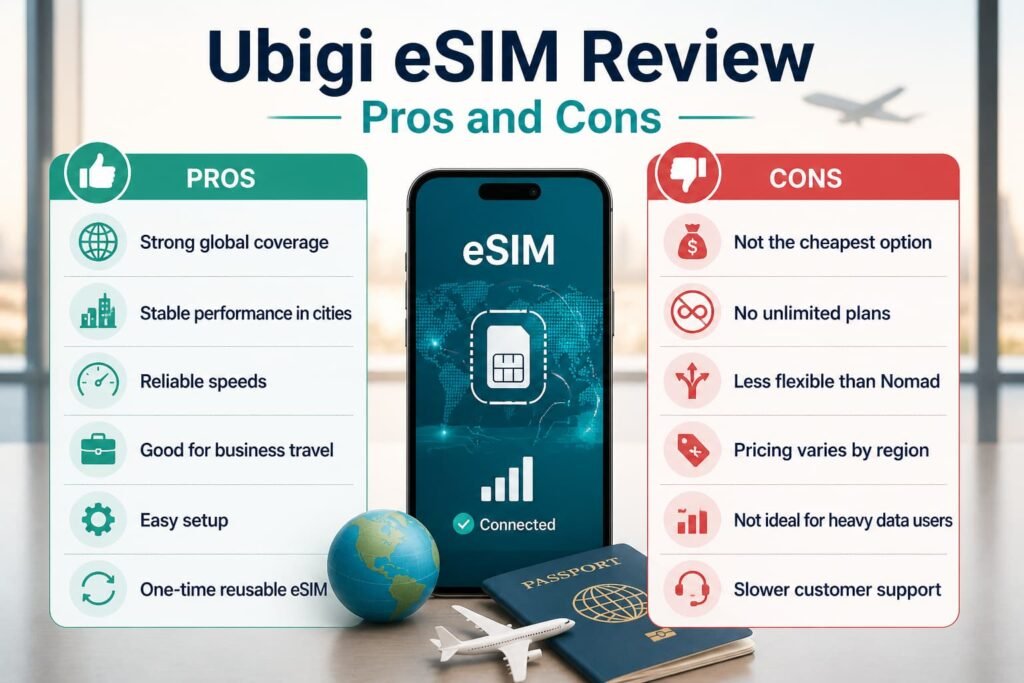
Ubigi eSIM Pros and Cons
| Pros | Cons |
|---|---|
| Strong global coverage | Not the cheapest option |
| Stable performance in cities | No unlimited plans |
| Reliable speeds | Less flexible than Nomad |
| Good for business travel | Pricing varies by region |
| Easy setup | Not ideal for heavy data users |
| One-time reusable eSIM | Slower customer support |
Ubigi vs Airalo
Ubigi and Airalo are built for different priorities.
- Airalo is cheaper and offers more plan options
- Ubigi focuses on stable performance and consistency
If your main goal is saving money, Airalo is the better choice. See the Airalo eSIM review.
For most trips, the price difference alone makes Airalo the more practical option.
Ubigi is the better choice if you want a more reliable connection that works consistently without troubleshooting.
Quick take: Airalo for budget, Ubigi for stability.
Ubigi vs Nomad
Ubigi and Nomad differ mainly in flexibility.
- Nomad offers better regional pricing and more control over data
- Ubigi focuses on consistent performance across destinations
If you’re traveling within one region and want to keep costs down, Nomad is usually the better value. See the Nomad eSIM review.
For regional trips, Nomad tends to be the more practical choice.
Ubigi is the better fit if you want a more stable connection without worrying about switching plans or managing usage too closely.
Quick take: Nomad for flexibility, Ubigi for reliability.
Ubigi vs GigSky
Ubigi and GigSky are closer in positioning.
- GigSky focuses on premium global coverage and advanced features
- Ubigi offers similar reliability at a lower price
If you want a premium global solution with broader features, GigSky is the better choice. See the GigSky eSIM review.
GigSky is especially strong for multi-country travel and business use.
Ubigi is the better option if you want strong performance without paying premium pricing.
Quick take: GigSky for premium, Ubigi for balanced value.
Ubigi vs aloSIM
Ubigi and aloSIM differ mainly in simplicity versus performance.
- aloSIM focuses on simple setup and predictable pricing
- Ubigi focuses on stronger and more consistent performance
If you want something easy to set up and use without overthinking plans, aloSIM is the better option. See the aloSIM eSIM review.
aloSIM is usually the better choice for casual travel and moderate data use.
Ubigi is the better fit if you want a more reliable connection, especially in busy travel environments.
Quick take: aloSIM for simplicity, Ubigi for performance.
Ubigi vs Holafly
Ubigi and Holafly differ mainly in how data is structured.
- Holafly offers unlimited data plans
- Ubigi uses fixed data with predictable usage
If you don’t want to track usage, Holafly is the better option. See the Holafly eSIM review.
If you use a lot of data, stream often, or want a more hands-off experience, Holafly is easier.
Ubigi is the better choice if you prefer stable performance and more control over how your data is used.
Quick take: Holafly for unlimited data, Ubigi for control and stability.
Best Use Cases for Ubigi
Ubigi works best in situations where a stable connection matters more than flexibility or price.
- trips that involve multiple cities or countries without wanting to switch eSIMs
- navigation, messaging, or work where a consistent connection is important
- busy urban environments like airports, business districts, and city centers
- travel where reliability matters more than finding the lowest-cost plan
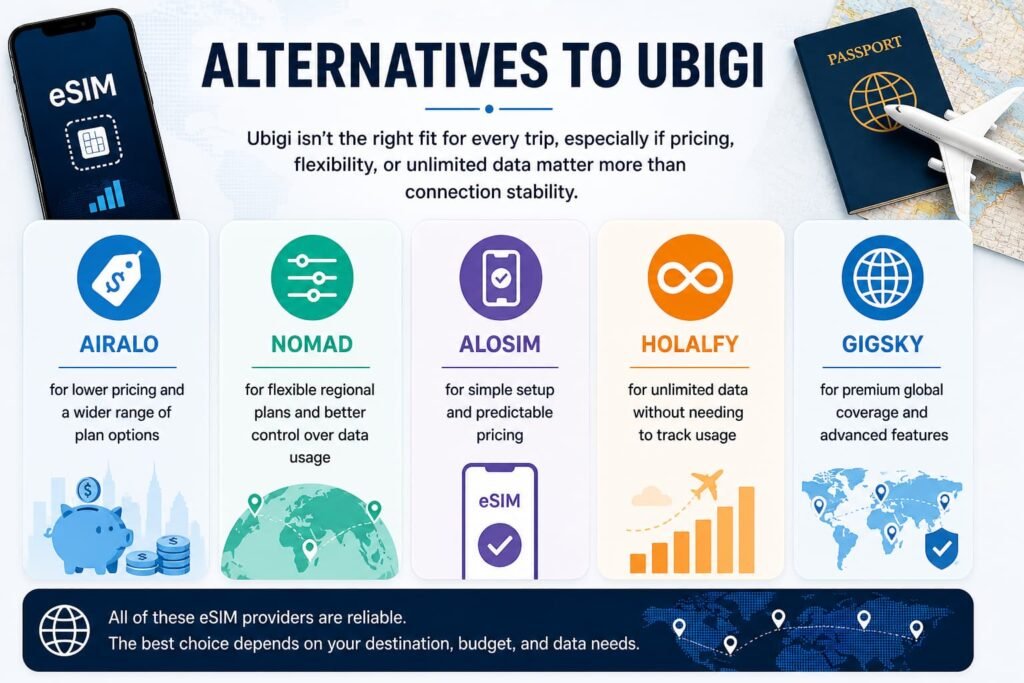
Alternatives to Ubigi
Ubigi isn’t the right fit for every trip, especially if pricing, flexibility, or unlimited data matter more than connection stability.
- Airalo for lower pricing and a wider range of plan options
- Nomad for flexible regional plans and better control over data usage
- aloSIM for simple setup and predictable pricing
- Holafly for unlimited data without needing to track usage
- GigSky for premium global coverage and advanced features
If you are still deciding, see the Best eSIM for International Travel guide for a full comparison.
Related Guides
If you’re comparing providers or getting ready to set up your eSIM, these guides will help:
- Airalo eSIM review
- aloSIM eSIM review
- Nomad eSIM review
- Holafly eSIM review
- GigSky eSIM review
- eSIM Providers by Country
- Best eSIM for International Travel
- iPhone eSIM setup guide
- Android eSIM setup guide
Should You Choose Ubigi?
Choose Ubigi if:
- you want reliable speeds in cities and travel hubs
- you need stable data for work or daily use
- you prefer a consistent connection without switching plans
Skip Ubigi if:
- you want the lowest price
- you prefer unlimited data
- you need maximum flexibility in plan options
Final Thoughts
Ubigi focuses on what matters most when you’re actually traveling — a connection that works consistently without frustration.
It’s not the cheapest option, and it doesn’t offer unlimited data, but that’s not the goal. Ubigi is built for reliability, especially in busy cities and multi-country trips where weaker connections tend to fail.
For most travelers, a stable connection is more valuable than saving a few dollars or having extra features you don’t use.
If you want an eSIM that simply works when you need it, without constant switching or troubleshooting, Ubigi is one of the most reliable options available today.